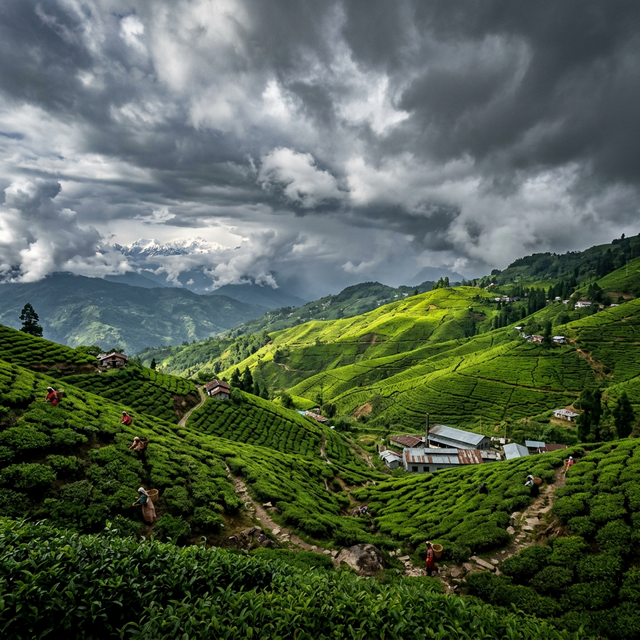
High up in the misty hills of Darjeeling, where the air is crisp and the vistas are serene, lies a heritage that has captured the hearts of many: Darjeeling tea. Known as the 'Champagne of Teas,' this delicate beverage is as much a part of the land as the people who cultivate it. However, a new challenge looms large over the tea gardens – climate change, manifesting through erratic monsoon patterns.
Introduction
The monsoon season, vital for agriculture across India, is undergoing unpredictable shifts. For the tea gardens of Darjeeling, traditionally reliant on consistent rainfall patterns, these changes pose a significant threat. The unique flavor of Darjeeling tea, which is internationally renowned, depends greatly on the region's specific microclimate. But what happens when that microclimate begins to alter?
The Historical Context
Darjeeling's tea history dates back to the 19th century when the British colonial administration first established plantations in the region. Over time, the Gorkha community, with its deep-rooted connection to the land, became an integral part of this industry. Generations of families have worked these gardens, passing down knowledge and tradition as precious as the tea itself.
"Our forefathers taught us to listen to the land," says Bimal Gurung, a third-generation tea garden worker. "The monsoon rains were like a rhythm to our lives, guiding us in planting and harvesting. But now, that rhythm is broken."
The Impact of Changing Monsoons
Recent studies have shown that rainfall in Darjeeling has become increasingly erratic, with periods of drought followed by intense downpours. These fluctuations not only affect the quantity of tea but also its quality. The first flush of the season, prized for its light, floral flavor, is particularly vulnerable to these changes.
"The first flush is like a delicate flower," explains Meena Tamang, a local tea sommelier. "If the rains come too heavy or too late, it loses its essence."
The economic implications are profound. Thousands of families in the region depend on tea cultivation for their livelihood. As the quality of the tea diminishes, so do their earnings. Smallholder farmers, in particular, are feeling the strain, as they lack the resources to adapt to these rapid changes.
Community Responses and Resilience
Despite these challenges, the Gorkha community remains resilient. Initiatives are springing up across the region to combat the effects of climate change. From rainwater harvesting techniques to diversifying crops, the community is exploring various strategies to safeguard their future.
"We have to adapt," says Pranaya Rai, a young activist leading environmental workshops in the area. "Our ancestors faced many challenges, and they overcame them with wisdom and unity. So can we."
The story of Darjeeling tea is not just about a beverage but about a way of life. The Gorkha community's relationship with the land is symbiotic, and their determination to preserve this bond is unwavering.
Conclusion
As the world grapples with the broader impacts of climate change, the plight of Darjeeling’s tea gardens serves as a poignant reminder of the intricate ties between culture, livelihood, and the environment. The future of the 'Champagne of Teas' may be uncertain, but the spirit of the people who cultivate it endures, much like the rich aroma of the tea leaves they harvest.
दार्जिलिङका कुहिरोले ढाकिएका पहाडहरूमा, जहाँ हावा ताजा छ र दृश्यहरू शान्त छन्, एउटा सम्पदा रहेको छ जसले धेरैको हृदयलाई जितेको छ: दार्जिलिङ चिया। 'चियाको च्याम्पेन' भनेर चिनिने यो नाजुक पेय पदार्थ जमिन जति नै यसलाई खेती गर्ने मानिसहरूको हिस्सा हो। तर चिया बगानहरूमा जलवायु परिवर्तनको नयाँ चुनौती देखा परेको छ, जुन अनियमित मनसुन ढाँचाहरूको रूपमा प्रकट भएको छ।
परिचय
भारतभरि कृषि लागि अत्यावश्यक मनसुन मौसम अप्रत्याशित परिवर्तनहरू हुँदै छ। परम्परागत रूपमा स्थिर वर्षा ढाँचाहरूमा निर्भर दार्जिलिङका चिया बगानहरूका लागि यी परिवर्तनहरूले ठूलो खतरा उत्पन्न गर्छ। अन्तर्राष्ट्रिय रूपमा प्रख्यात दार्जिलिङ चियाको अनौठो स्वाद क्षेत्रको विशेष सूक्ष्म जलवायुमाथि भर पर्छ। तर जब त्यो सूक्ष्म जलवायु परिवर्तन हुन थाल्छ, के हुन्छ?
ऐतिहासिक सन्दर्भ
दार्जिलिङको चिया इतिहास १९ औं शताब्दीमा पुग्छ, जब ब्रिटिश उपनिवेश प्रशासनले पहिलो पटक क्षेत्रको बगानहरू स्थापना गरे। समयसँगै, जमिनसँगको गहिरो सम्बन्ध भएको गोर्खा समुदाय यस उद्योगको अभिन्न हिस्सा बन्यो। पुस्तौंपुस्तादेखि परिवारहरूले यी बगानहरूमा काम गरिरहेका छन्, ज्ञान र परम्परा चियाजस्तै मूल्यवान् रूपमा हस्तान्तरण गर्दै।
"हाम्रा पूर्वजहरूले हामीलाई जमिनलाई सुन्न सिकाए," भन्छन् विमल गुरुङ, तेस्रो पुस्ताका चिया बगान कामदार। "मनसुनको वर्षा हाम्रो जीवनको लयजस्तै थियो, हाम्रा रोपाइँ र कटाइको मार्गदर्शन गर्दै। तर अब, त्यो लय टुटिसकेको छ।"
परिवर्तित मनसुनको प्रभाव
हालसालैका अध्ययनहरूले देखाएका छन् कि दार्जिलिङमा वर्षा बढ्दो अनियमित भएको छ, सुख्खा अवधि पछि तीव्र वर्षा हुँदै आएको छ। यी उतारचढावले चियाको मात्रामा मात्र होइन, गुणस्तरमा पनि असर गर्छ। मौसमको पहिलो फ्लस, यसको हल्का, फूलजस्तो स्वादको लागि मूल्यवान्, विशेष रूपमा यी परिवर्तनहरूलाई संवेदनशील छ।
"पहिलो फ्लस एउटा नाजुक फूलजस्तै हो," भन्छिन् मिना तामाङ, स्थानीय चिया सोमेलियर। "यदि वर्षा धेरै भारी वा ढिलो भयो भने, यसले आफ्नो सार गुमाउँछ।"
आर्थिक प्रभाव गहिरो हुन्छ। यस क्षेत्रका हजारौं परिवार चिया खेतीमा निर्भर छन्। चियाको गुणस्तर घट्दै जाँदा, उनीहरूको आम्दानी पनि घट्छ। विशेष गरी साना किसानहरू तनावमा छन्, किनकि उनीहरूसँग यी द्रुत परिवर्तनहरूमा अनुकूलन गर्ने स्रोतहरू छैनन्।
समुदायको प्रतिक्रिया र सहनशीलता
यी चुनौतीहरूका बावजुद, गोर्खा समुदाय सहनशील बनेको छ। जलवायु परिवर्तनको प्रभावहरूको सामना गर्न क्षेत्रभरि पहलहरू सुरु हुँदै आएका छन्। वर्षा जल सङ्कलन प्रविधिबाट बाली विविधीकरणसम्म, समुदाय आफ्नो भविष्य सुरक्षित गर्न विभिन्न रणनीतिहरू अन्वेषण गर्दैछ।
"हामी अनुकूल हुनुपर्छ," भन्छन् प्रणय राई, यस क्षेत्रमा वातावरणीय कार्यशालाहरूको नेतृत्व गर्दै गरेका युवा कार्यकर्ता। "हाम्रा पूर्वजहरूले धेरै चुनौतीहरूको सामना गरे, र उनीहरूले ज्ञान र एकताले तीलाई पार गरे। हामी पनि सक्छौं।"
दार्जिलिङ चियाको कथा मात्र पेय पदार्थको बारेमा होइन, तर जीवनशैलीको बारेमा हो। गोर्खा समुदायको जमिनसँगको सम्बन्ध सहजीवितामा आधारित छ, र यो सम्बन्धलाई जोगाउन उनीहरूको दृढता अद्वितीय छ।
निष्कर्ष
जब विश्व जलवायु परिवर्तनको व्यापक प्रभावहरूसँग जुधिरहेको छ, दार्जिलिङका चिया बगानहरूको पीडा संस्कृत, जीविकोपार्जन र वातावरणबीचको जटिल सम्बन्धको एक मार्मिक स्मरण हो। 'चियाको च्याम्पेन' को भविष्य अनिश्चित हुन सक्छ, तर यसलाई खेती गर्ने मानिसहरूको भावना कायम छ, उनीहरूले सङ्कलन गर्ने चिया पातहरूको समृद्ध गन्धझैँ।