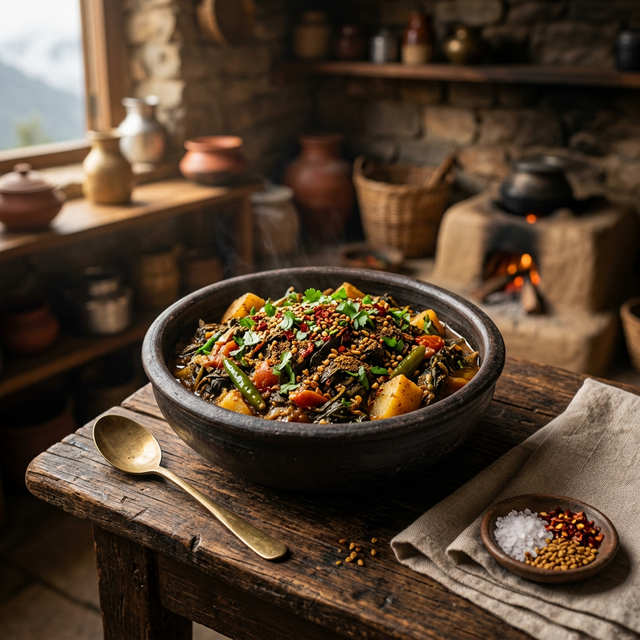
Once upon a time, in the verdant hills of Darjeeling and Kalimpong, the Gorkha families would gather around their hearths to prepare for the harsh winters. Among the many preparations, one ritual stood out: the making of Gundruk. This fermented leafy green was more than just a food item; it was a cultural emblem, a symbol of sustenance, and a testament to the resilience of the Gorkha people.
The Humble Beginnings
Gundruk is made from leafy vegetables such as mustard greens, radish leaves, and cauliflower greens. The process of fermenting these greens has been passed down through generations. In the chilly winter months, when fresh vegetables were scarce, Gundruk served as a vital source of nutrition. It was a staple at every Gorkha table, often accompanying a steaming bowl of dal bhat.
"We didn't have refrigerators back then," reminisces Maya Tamang, a 78-year-old resident of Kalimpong. "My mother would prepare large batches of Gundruk in late autumn. It was our way of preserving the blessings of the summer harvest."
For centuries, Gundruk was confined to the kitchens of villages in the hills. It was a food of the common folk, made from the earth and consumed with gratitude.
The Journey to Global Recognition
Fast forward to the 21st century, and the narrative of Gundruk is changing. With the rise of global interest in fermented foods and their health benefits, Gundruk has found its way into high-end restaurants not only in India but also in global culinary capitals like London and New York.
Chefs like Rohan Joshi in New Delhi have taken a keen interest in traditional foods. "Gundruk is a superfood," says Joshi. "It's rich in probiotics and has a unique flavor profile that can elevate any dish." In his restaurant, Gundruk is no longer just a side dish; it's the star of innovative salads and gourmet meals.
A Cultural Revival
This global interest has sparked a cultural revival among the Indian Gorkha community. Younger generations, who once viewed Gundruk as old-fashioned, are now embracing it as a connection to their roots. Workshops on traditional fermentation techniques are being organized in Darjeeling and Sikkim, drawing enthusiasts from all over the world.
"It's incredible to see how something that was once so ordinary has become extraordinary," says Arjun Rai, a cultural historian. "Gundruk is more than just a food; it's a narrative of our identity, our connection to the land, and our ability to adapt and thrive."
The Future of Gundruk
As Gundruk continues its journey from village staple to global superfood, it carries with it the stories of the Gorkha people. It is a reminder of the strength found in simplicity and the power of tradition in a rapidly changing world.
In every bite of Gundruk, there is a taste of history, a hint of nostalgia, and a promise of a thriving cultural heritage that is both timeless and relevant.
कुनै समय, दार्जिलिङ र कालिम्पोङका हराभरा पहाडहरूमा, गोर्खा परिवारहरू जाडोको कठोर मौसमको तयारी गर्न आफ्ना चुलाहरू वरिपरि भेला हुन्थे। धेरै तयारीहरू मध्ये, एउटा अनुष्ठान विशेष थियो: गुन्द्रुक बनाउने। यो किण्वित साग-पात मात्र खाना होइन; यो एक सांस्कृतिक प्रतीक थियो, अस्तित्वको प्रतीक र गोर्खा जनताको सहनशीलताको प्रमाण थियो।
साधारण सुरूवात
गुन्द्रुक तोरीका साग, मूला साग, र फूलगोभीका सागबाट बनाइन्छ। यी साग-पातको किण्वन प्रक्रिया पुस्तौं पुस्तासम्म हस्तान्तरण हुँदै आएको छ। चिसो जाडो महिनाहरूमा, जब ताजा तरकारीहरू दुर्लभ हुन्थे, गुन्द्रुक जीवनको एक महत्वपूर्ण स्रोत थियो। यो हरेक गोर्खा टेबलमा एक मुख्य खाना थियो, अक्सर एक गर्म दाल भातको कटोरा संग।
"त्यस समयमा फ्रिज थिएन," ७८ वर्षीया कालिम्पोङ निवासी माया तामाङ सम्झिन्छिन्। "मेरो आमा लेट हेमन्त ऋतुमा गुन्द्रुकको ठूला ब्याचहरू तयार गर्नुहुन्थ्यो। यो हाम्रो ग्रीष्मकालीन फसलको आशीर्वादलाई सुरक्षित गर्ने तरिका थियो।"
शताब्दीयौंसम्म, गुन्द्रुक पहाडका गाउँहरूका भान्सामा सीमित थियो। यो साधारण जनताको खाना थियो, पृथ्वीबाट बनेको र कृतज्ञतासाथ खपत गरियो।
विश्वव्यापी मान्यता तर्फको यात्रा
२१औं शताब्दीमा अघि बढ्दै गर्दा, गुन्द्रुकको कथा परिवर्तन हुँदैछ। किण्वित खाद्य पदार्थहरूको स्वास्थ्य लाभप्रति विश्वव्यापी चासोको वृद्धि संग, गुन्द्रुक मात्र भारतमा नभई लन्डन र न्यूयोर्क जस्ता विश्वव्यापी पाक राजधानीहरूका उच्च स्तरीय रेस्टुरेन्टहरूमा आफ्नो ठाउँ बनाउँदैछ।
नयाँ दिल्लीका रोहन जोशी जस्ता शेफहरूले परम्परागत खानाहरूमा गहिरो चासो लिएका छन्। "गुन्द्रुक सुपरफुड हो," जोशी भन्छन्। "यो प्रोबायोटिक्समा धनी छ र यसको अनौठो स्वादले कुनै पनि परिकारलाई उचाइ दिन सक्छ।" उनको रेस्टुरेन्टमा, गुन्द्रुक अब केवल साइड डिश मात्र छैन; यो नवप्रवर्तनात्मक सलाद र ग्युरमेट भोजनको तारिका हो।
सांस्कृतिक पुनरुत्थान
यस विश्वव्यापी चासोले भारतीय गोर्खा समुदायमा सांस्कृतिक पुनरुत्थानको स्फूर्ति ल्याएको छ। एक समय गुन्द्रुकलाई पुरानो मान्ने युवा पुस्ताले अब यसलाई आफ्नो जरा जोड्ने माध्यमको रूपमा अँगालेका छन्। परम्परागत किण्वन प्रविधिहरूमा कार्यशाला दार्जिलिङ र सिक्किममा आयोजना गरिँदैछन्, जसले विश्वभरका उत्साहीहरूलाई आकर्षित गरिरहेको छ।
"यो अविश्वसनीय छ कि कुनै समय साधारण मानिएको कुरा अब असाधारण भएको छ," सांस्कृतिक इतिहासकार अर्जुन राई भन्छन्। "गुन्द्रुक मात्र खाना होइन; यो हाम्रो पहिचानको कथा, जमिनसँगको हाम्रो सम्बन्ध, र अनुकूलन र फस्टाउन सक्ने हाम्रो क्षमता हो।"
गुन्द्रुकको भविष्य
गुन्द्रुक गाउँको मुख्य खानाबाट विश्वव्यापी सुपरफुड सम्मको यात्रा गर्दै गर्दा, यसले गोर्खा जनताको कथाहरू बोकेको छ। यो सरलतामा पाइने शक्तिको स्मरण हो र छिटो बदलिंदै गरेको संसारमा परम्पराको शक्तिको प्रमाण हो।
गुन्द्रुकको प्रत्येक टुक्रामा, इतिहासको स्वाद, पुरानो यादको झलक, र एक जीवन्त सांस्कृतिक धरोहरको प्रतिज्ञा छ, जुन समयातीत र सान्दर्भिक दुवै हो।