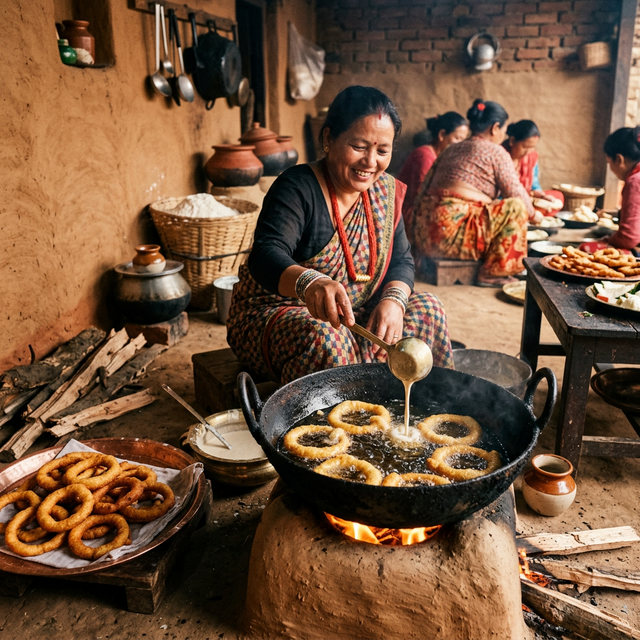
Sel Roti, a delicacy synonymous with the festive cheer of the Indian Gorkha community, holds more than just a culinary significance. This ring-shaped, mildly sweetened rice bread is a tangible representation of culture, tradition, and history interwoven through generations in the hills of Darjeeling, Kalimpong, and beyond.
The Historical Context
The origin of Sel Roti dates back centuries, long before the Gorkhas settled in the lush tea gardens of India. It is a dish that traces its roots to the ancient hills of Nepal, where it was crafted with love and shared during festivals and significant family gatherings. As the Gorkha regiments moved and settled in various parts of India, they carried with them this beloved tradition, infusing local flavors and practices into its preparation.
A Festive Staple
Sel Roti is more than just food; it is a centerpiece of festivities such as Dashain and Tihar. During these times, the aroma of freshly fried Sel Roti wafts through the air, inviting everyone to partake in the joyous celebrations. The process of making Sel Roti is a communal affair, often involving family members who gather in the kitchen, each contributing to the preparation that binds them together in harmony and laughter.
"I remember as a child watching my grandmother skillfully pour the batter into hot oil, her hands moving with the grace that only years of practice could bring," recounts Maya Rai from Kalimpong.
The art of making Sel Roti is passed down from generation to generation, with each family adding its unique twist. Some might add ripe bananas to the batter for a sweeter taste, while others prefer a hint of cardamom or fennel to infuse it with aromatic spice.
Cultural Significance
The making of Sel Roti is a ritual in itself, symbolizing prosperity and unity. It is said that the circular shape represents the cycle of life and continuity, a belief that resonates deeply with the community's values. During festivals, Sel Roti is often offered to deities, a gesture of gratitude and reverence.
In the Gorkha community, exchanging Sel Roti is akin to sharing blessings. It is common for neighbors to exchange plates of Sel Roti, fostering a spirit of camaraderie and mutual respect. This tradition is particularly cherished in the bustling hill towns where the community's close-knit nature shines brightest.
The Human Element
For many, Sel Roti is a reminder of home and family. It carries the essence of stories shared and memories forged over generations. "Whenever I fry Sel Roti, I feel connected to my roots, to my ancestors who made it before me," says Arjun Gurung, a young Gorkha from Darjeeling now living in the city.
This sentiment is echoed by many who have moved away from the hills, as the taste of Sel Roti brings back fond memories of home, of festivals celebrated with loved ones, and of a culture that thrives in the heart of every Gorkha.
In essence, Sel Roti is more than a festive delicacy; it is a symbol of heritage and identity, a testament to the enduring spirit of the Gorkha community. As the world changes, this humble dish remains a constant, a delicious reminder of where they come from and the rich cultural tapestry they are a part of.
सेल रोटी, भारतीय गोर्खा समुदायको चाडपर्वको उल्लाससँग समानार्थी परिकार, मात्र पाककलाको महत्वभन्दा बढी केही हो। यो गोलो आकारको, हल्का गुलियो चामलको रोटी संस्कार, परम्परा, र इतिहासको मूर्त प्रतिनिधित्व हो, जसले पुस्तौं पुस्तासम्म दार्जिलिङ, कालिम्पोङ, र आसपासका पहाडहरूमा जरा गाडेको छ।
ऐतिहासिक सन्दर्भ
सेल रोटीको उत्पत्ति शताब्दीयौं पहिलेको हो, गोर्खाहरू भारतका हराभरा चिया बगानहरूमा बसोबास गर्नुभन्दा धेरै अघि। यो परिकारको जरा नेपालका प्राचीन पहाडहरूसम्म पुग्छ, जहाँ यो प्रेमपूर्वक बनाइन्थ्यो र चाडपर्व तथा महत्वपूर्ण पारिवारिक जमघटहरूमा बाँडिन्थ्यो। जब गोर्खा रेजिमेन्टहरू भारतका विभिन्न भागहरूमा सरे र बसोबास गरे, उनीहरूले यस प्रिय परम्परालाई साथमा लगे, यसको तयारीमा स्थानीय स्वाद र अभ्यासहरू समावेश गर्दै।
चाडपर्वको प्रमुख परिकार
सेल रोटी मात्र खाना भन्दा बढी हो; यो दशैं र तिहार जस्ता चाडपर्वहरूको केन्द्रीय भाग हो। यी समयमा, ताजा तारेको सेल रोटीको सुगन्धले हावा भरिन्छ, हर्षोल्लासपूर्ण उत्सवहरूमा सहभागी हुन सबैलाई आमन्त्रित गर्दै। सेल रोटी बनाउने प्रक्रिया सामूहिक प्रयास हो, प्रायः परिवारका सदस्यहरू भान्सामा जम्मा हुन्छन्, जो तयारीमा योगदान पुर्याउँछन् र हाँसोमा एकता बाँध्छन्।
"म बालक हुँदा मेरी हजुरआमालाई तातो तेलमा पिठो हाल्ने कला कौशलताका साथ हेरेको सम्झन्छु, जसले मात्र वर्षौंको अभ्यासको अनुग्रह ल्याउन सक्छ," कालिम्पोङकी माया राई सम्झन्छिन्।
सेल रोटी बनाउने कला पुस्तौं पुस्तासम्म हस्तान्तरण गरिन्छ, प्रत्येक परिवारले आफ्नो अनौठो ट्विस्ट थप्दै। केहीले पिठोमा पाकेको केरा थप्न सक्छन् मिठो स्वादको लागि, भने अरूले सुगन्धित मसला दिनका लागि सुकमेल वा सौंफको संकेत मन पराउँछन्।
सांस्कृतिक महत्व
सेल रोटी बनाउनु आफैंमा एक अनुष्ठान हो, जसले समृद्धि र एकतालाई प्रतीकात्मक रूपमा देखाउँछ। भनिन्छ कि गोलो आकार जीवनको चक्र र निरन्तरतालाई प्रतिनिधित्व गर्दछ, जुन विश्वास समुदायका मान्यतासँग गहिरो रूपमा मेल खान्छ। चाडपर्वको समयमा, सेल रोटी प्रायः देवी-देवतालाई अर्पित गरिन्छ, धन्यवाद र श्रद्धाको संकेतको रूपमा।
गोर्खा समुदायमा, सेल रोटी साटासाट गर्नु भनेको आशीर्वाद साटासाट गर्नु जस्तै हो। छिमेकीहरूले सेल रोटीको थाल साटासाट गर्नु सामान्य हो, सहकार्य र आपसी सम्मानको भावना प्रवर्द्धन गर्दै। यो परम्परा विशेष गरी व्यस्त पहाडी सहरहरूमा प्रिय छ, जहाँ समुदायको निकटता झल्किन्छ।
मानवीय तत्व
धेरैको लागि, सेल रोटी घर र परिवारको सम्झना हो। यसले धेरै पुस्ता पार गरिएका कथाहरूको सार र स्मृतिहरू बोकेको छ। "जब म सेल रोटी तार्छु, म मेरो जरा, म भन्दा पहिले यसलाई बनाउने मेरा पुर्खाहरूको सङ्ग जोडिएको महशुस गर्दछु," दार्जिलिङका युवा गोर्खा अर्जुन गुरुङ भन्छन्, जो अब सहरमा बस्छन्।
यो भावना धेरैले प्रतिध्वनित गर्छन् जो पहाडहरूबाट टाढा सरेका छन्, किनकि सेल रोटीको स्वादले घरको मीठो सम्झना ल्याउँछ, प्रियजनहरूसँग मनाइएका चाडपर्वहरूको, र प्रत्येक गोर्खाको हृदयमा फस्टाउँदै गरेको संस्कृतिको।
वास्तवमा, सेल रोटी चाडबाडको परिकार भन्दा बढी हो; यो सम्पदाको प्रतीक र पहिचानको प्रमाण हो, गोर्खा समुदायको अटल भावनाको प्रमाण हो। जब संसार परिवर्तन हुन्छ, यो साधारण परिकार एक स्थिरता रहन्छ, उनीहरूको उत्पत्तिको स्वादिलो सम्झना, र उनीहरूको समृद्ध सांस्कृतिक बुनाईको हिस्सा।