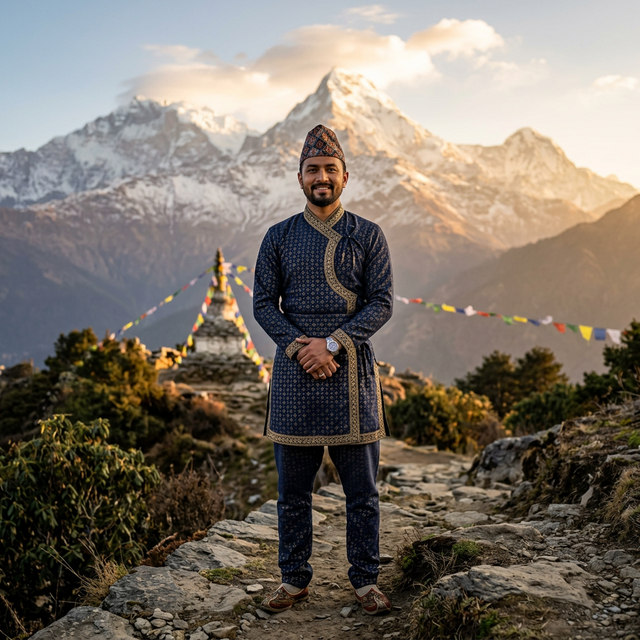
The Daura Suruwal, a garment that has transcended time, is not just a piece of clothing for the Gorkha men but a symbol of identity, pride, and a rich cultural heritage. This traditional attire, often seen in the hilly regions of Darjeeling, Kalimpong, and the Gorkha communities of Nepal, is steeped in historical significance and religious connotations.
The Origins of Daura Suruwal
The Daura Suruwal's origins are as enigmatic as the mist-covered hills of the Gorkha region. It is believed that the attire has its roots in the early 19th century, during the reign of the Rana dynasty in Nepal. The double-breasted design of the Daura is said to symbolize the coat of arms, with its eight strings representing the eight astrological signs. The Suruwal, a pair of tight-fitting trousers, complements the Daura, providing both elegance and flexibility.
A Symbol of Cultural Identity
For the Gorkha community, the Daura Suruwal is more than just a national dress. It is a fabric of identity woven with threads of heritage and pride. In the bustling streets of Darjeeling, amidst the aroma of tea leaves and melodies of Nepali folk songs, the Daura Suruwal stands as a testament to the enduring spirit of the Gorkha people.
"Wearing the Daura Suruwal is like wrapping oneself in the history and valor of our ancestors," says Arjun Rai, a local historian from Kalimpong.
The attire is donned on special occasions, festivals, and ceremonies, often accompanied by the traditional Dhaka topi, a cap made of fine cotton. This ensemble is not just a fashion statement but a declaration of belonging to a community that values tradition and honor.
The Gorkha Regiments and Daura Suruwal
In the annals of military history, the Gorkha regiments are renowned for their bravery and discipline. The Daura Suruwal plays a significant role in this narrative. During formal occasions and parades, Gorkha soldiers don the attire with pride, a reminder of their roots and the indomitable spirit of their forefathers.
The significance of the Daura Suruwal is also reflected in its adaptability. While the traditional white cotton version is most common, variations in color and fabric have emerged over time, allowing the attire to be worn in diverse climates and settings.
Preserving the Legacy
In today's fast-paced world, where modern fashion often overshadows traditional attire, the Daura Suruwal remains a bastion of cultural preservation. Efforts by cultural organizations and local governments to promote and celebrate this attire have seen young Gorkhas embracing their heritage with renewed enthusiasm.
"The Daura Suruwal is not just a dress; it is a legacy that we must pass on to future generations," emphasizes Tenzing Bhutia, a cultural activist from Darjeeling.
As we look to the future, the Daura Suruwal continues to inspire, reminding the Gorkha community of their resilient past and the rich tapestry of their culture.
दौरा सुरुवाल, समयको परिधिलाई पार गरेको एक पोशाक, गोर्खा पुरुषहरूको लागि केवल कपडाको टुक्रा मात्र होइन, पहिचान, गर्व, र समृद्ध सांस्कृतिक धरोहरको प्रतीक हो। यो परम्परागत परिधान, प्रायः दार्जीलिङ, कालिम्पोङ, र नेपालका गोर्खा समुदायको पहाडी क्षेत्रमा देखिने, ऐतिहासिक महत्त्व र धार्मिक अर्थहरूमा डुबेको छ।
दौरा सुरुवालको उत्पत्ति
दौरा सुरुवालको उत्पत्ति गोर्खा क्षेत्रका कुहिरोले ढाकिएका पहाडजस्तै रहस्यमय छ। यो विश्वास गरिन्छ कि यो पोशाकको जरा उन्नाइसौं शताब्दीको प्रारम्भमा, नेपालमा राणा वंशको शासनकालमा छ। दौराको डबल-ब्रेस्टेड डिजाइनले हतियारको कोटलाई जनाउँछ भन्ने भनाइ छ, यसको आठ डोरीहरूले आठ ग्रहको चिन्हलाई जनाउँछ। सुरुवाल, एक जोडी टाइट-फिटिंग पाइन्ट, दौरालाई पूरक गर्दछ, जसले दुवै सुन्दरता र लचकता प्रदान गर्दछ।
सांस्कृतिक पहिचानको प्रतीक
गोर्खा समुदायको लागि, दौरा सुरुवाल केवल राष्ट्रिय पोशाकभन्दा बढी हो। यो पहिचानको कपडा हो, जसमा गर्व र धरोहरको धागोले बुनेको छ। दार्जीलिङको व्यस्त सडकहरूमा, चिया पातको सुगन्ध र नेपाली लोक गीतको धुनमा, दौरा सुरुवाल गोर्खा जनताको स्थायी आत्माको गवाहको रूपमा उभिन्छ।
"दौरा सुरुवाल लगाउनु भनेको हाम्रा पुर्खाहरूको इतिहास र वीरतालाई आफ्नो वरिपरि लपेट्नु जस्तै हो," कालिम्पोङका स्थानीय इतिहासकार अर्जुन राई भन्छन्।
यो पोशाक विशेष अवसरहरू, पर्वहरू, र समारोहहरूमा लगाइन्छ, प्रायः परम्परागत ढाका टोपीसँग, राम्रो कपासबाट बनेको टोपी। यो पोशाक केवल फेसनको बयान मात्र होइन तर परम्परा र सम्मानलाई महत्व दिने समुदायमा समर्पितको घोषणा हो।
गोर्खा रेजिमेन्टहरू र दौरा सुरुवाल
सैन्य इतिहासको अभिलेखमा, गोर्खा रेजिमेन्टहरू आफ्नो वीरता र अनुशासनको लागि प्रसिद्ध छन्। दौरा सुरुवालले यस कथामा महत्वपूर्ण भूमिका खेल्छ। औपचारिक अवसरहरू र परेडहरूमा, गोर्खा सैनिकहरूले गर्वका साथ यो पोशाक लगाउँछन्, उनीहरूको जरा र उनीहरूको पुर्खाहरूको अडानको आत्माको सम्झना।
दौरा सुरुवालको महत्त्व यसको अनुकूलतामा पनि झल्किन्छ। परम्परागत सेतो कपासको संस्करण सबैभन्दा सामान्य भए तापनि, रंग र कपडामा विविधताहरू समयसँगै देखा परेका छन्, जसले यो पोशाकलाई विविध मौसम र वातावरणमा लगाउन सकिने बनाएको छ।
धरोहरको संरक्षण
आजको तीव्र गतिको संसारमा, जहाँ आधुनिक फैशनले प्रायः परम्परागत पोशाकलाई ओझेलमा पार्छ, दौरा सुरुवाल सांस्कृतिक संरक्षणको एक आधार रहन्छ। सांस्कृतिक संगठनहरू र स्थानीय सरकारहरूद्वारा यस पोशाकलाई प्रोत्साहन र मनाउने प्रयासहरूले युवा गोर्खाहरूलाई आफ्नो धरोहरलाई नयाँ उत्साहका साथ अपनाउन प्रोत्साहित गरेको छ।
"दौरा सुरुवाल केवल पोशाक होइन; यो एक धरोहर हो, जसलाई हामीले भावी पुस्तालाई हस्तान्तरण गर्नुपर्छ," दार्जीलिङका सांस्कृतिक कार्यकर्ता तेन्जिङ भुटिया जोड दिन्छन्।
हामी भविष्यतर्फ हेर्दै गर्दा, दौरा सुरुवालले प्रेरणा दिन जारी राख्दछ, गोर्खा समुदायलाई उनीहरूको सुदृढ विगत र उनीहरूको संस्कृति को समृद्ध चित्रणको सम्झना गराउँदै।