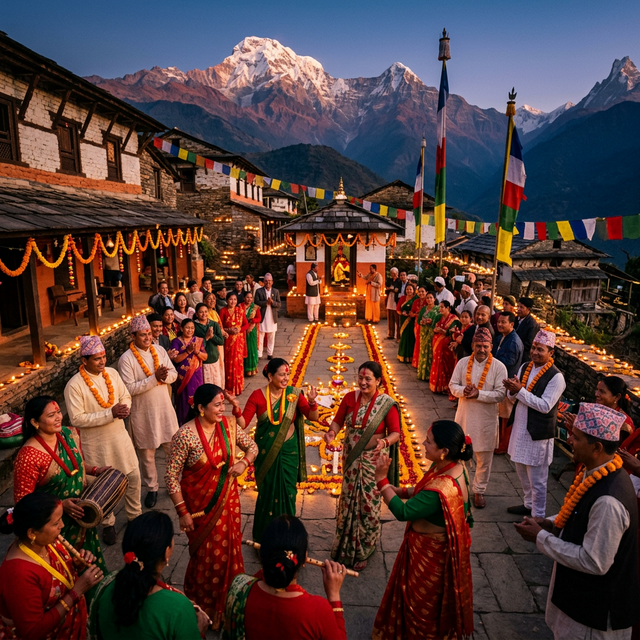
In the heart of the Indian Gorkha community, nestled amidst the serene tea gardens and the picturesque hills of Darjeeling and Kalimpong, the festival of Tihar is celebrated with immense joy and heartfelt devotion. Known as the 'Festival of Lights,' Tihar illuminates not just the physical surroundings but also the bonds between family members, animals, and nature itself.
Historical Context
Tihar, also known as Deepawali in other parts of India, has a rich history intertwined with the legends and traditions of the Gorkha people. Historically, it marks the end of the harvest season, a time when the community gives thanks for the abundance of crops and prays for prosperity in the coming year. The festival's origins are rooted in Hindu mythology, with tales of Yama, the God of Death, and his sister Yamuna, forming the basis for the customs observed during this festival.
As the story goes, Yamuna invited her brother Yama to her home and treated him with great respect and love. In return, Yama granted her a boon that anyone who receives a 'tika' from their sister on Bhai Tika would never die prematurely. This legend is central to the celebration of Tihar, reinforcing the bond between siblings.
Cultural Significance
Tihar is celebrated over five days, each with its unique rituals and significance. The first day, 'Kag Tihar,' is dedicated to crows, the messengers of Yama. Offerings are made to these birds to keep bad news at bay. The second day honors dogs, known as 'Kukur Tihar.' Dogs are considered protectors, and they are garlanded and fed delicious treats.
The third day, 'Gai Tihar' and 'Laxmi Puja,' is the most significant. Cows, symbols of prosperity and holiness, are worshipped in the morning, while the evening is reserved for Laxmi, the goddess of wealth. Homes are cleaned and decorated with oil lamps and colorful rangolis to welcome her blessings.
The fourth day varies among communities. For the Gorkhas, it is often celebrated as 'Goru Tihar' and 'Mha Puja,' where oxen are worshipped, and the self is honored, symbolizing the balance between nature and the individual.
The final day is 'Bhai Tika,' a day when sisters pray for their brothers' long life and prosperity by applying a multi-colored tika on their foreheads and performing rituals that include the exchange of gifts and blessings.
A Community Celebration
In the Gorkha settlements, whether in the bustling town of Darjeeling or the quiet villages of Kalimpong, Tihar is a time when the community comes together. Houses are adorned with lights, and the sound of traditional 'bhailo' and 'deusi' songs fill the air. These songs are sung by groups as they visit each home, sharing in the joy and spreading festive cheer.
"Tihar is not just a festival; it's a reminder of our connection to each other and the world around us," says Laxmi Gurung, an elder from Kalimpong.
For many, Tihar is a time to reflect on the past year, to honor the relationships that sustain them, and to renew their commitments to family and community. It is a festival that beautifully intertwines the spiritual with the social, reminding us of the values of respect, love, and gratitude.
Conclusion
As the festival of Tihar draws to a close, the flickering lights of oil lamps continue to burn in the windows of Gorkha homes, symbolizing the enduring spirit of this vibrant community. In every diya, there is a story of hope, unity, and the unbreakable ties that bind them to their land and each other.
दार्जिलिङ र कालिम्पोङका मनोरम पहाडहरू र शान्त चिया बगानहरूको बीचमा बसोबास गर्ने भारतीय गोर्खा समुदायको हृदयमा तिहार पर्व अपार हर्ष र भक्तिभावका साथ मनाइन्छ। 'उज्यालोको चाड' भनेर चिनिने तिहारले केवल भौतिक वातावरणलाई मात्र नभएर परिवारका सदस्यहरू, जनावरहरू, र प्रकृतिसँगको सम्बन्धलाई पनि उज्यालो पार्छ।
ऐतिहासिक सन्दर्भ
तिहार, जुन भारतका अन्य भागहरूमा दीपावलीको नामले चिनिन्छ, गोर्खा जनताको किंवदन्ती र परम्परासँग गाँसिएको समृद्ध इतिहास छ। ऐतिहासिक रूपमा, यसले बालीको मौसमको अन्त्यलाई चिन्हित गर्दछ, जब समुदायले प्रशस्त बालीको लागि धन्यवाद दिन्छ र आउने वर्षको समृद्धिको लागि प्रार्थना गर्दछ। यस पर्वको उत्पत्ति हिन्दू पौराणिक कथामा जडित छ, जसमा मृत्युका देवता यम र उनका बहिनी यमुनाका कथाहरू यस पर्वका चलनहरूको आधार बनिरहेका छन्।
कथाअनुसार, यमुनाले आफ्नो दाजु यमलाई आफ्नो घरमा निमन्त्रणा गरिन् र ठूलो आदर र प्रेमका साथ स्वागत गरिन्। बदलीमा, यमले उनलाई वरदान दिए कि भाई टिकाको दिन बहिनीबाट टिका लगाउने व्यक्तिको अकाल मृत्यु हुँदैन। यो किंवदन्ती तिहारको उत्सवको केन्द्रमा छ, जसले दाजुभाइ र दिदीबहिनीको बन्धनलाई सुदृढ बनाउँछ।
सांस्कृतिक महत्व
तिहार पाँच दिनसम्म मनाइन्छ, प्रत्येक दिन आफ्नै अनोखा रीतिरिवाज र महत्वको साथ। पहिलो दिन, 'काग तिहार', कागहरूलाई समर्पित छ, जो यमका सन्देशवाहक हुन्। यी चराहरूलाई नराम्रो खबरलाई टाढा राख्नको लागि प्रसाद दिइन्छ। दोस्रो दिन कुकुरहरूको सम्मान गरिन्छ, जसलाई 'कुकुर तिहार' भनिन्छ। कुकुरहरूलाई रक्षक मानिन्छ, र उनीहरूलाई माला लगाइन्छ र स्वादिष्ट परिकारहरू खुवाइन्छ।
तेस्रो दिन, 'गाई तिहार' र 'लक्ष्मी पूजा', सबैभन्दा महत्त्वपूर्ण हो। गाईहरू, समृद्धि र पवित्रताको प्रतीक, बिहान पूजिन्छन्, जबकि साँझ लक्ष्मी, धनकी देवीको लागि सुरक्षित छ। घरहरू सफा गरिन्छ र तेल बत्ती र रंगीन रंगोलीले सजाइन्छ।
चौथो दिन समुदायहरूमा फरक नै हुन्छ। गोर्खाहरूका लागि, यो प्रायः 'गोरु तिहार' र 'म्हा पूजा' को रूपमा मनाइन्छ, जहाँ गोरुहरूको पूजा गरिन्छ, र आत्माको सम्मान गरिन्छ, जसले प्रकृति र व्यक्तिगतको बीचको सन्तुलनलाई प्रतीक गर्दछ।
अन्तिम दिन 'भाई टिका' हो, जब दिदीबहिनीहरूले आफ्ना दाजुभाइहरूको लामो जीवन र समृद्धिका लागि प्रार्थना गर्छन् र उनीहरूको निधारमा बहुरंगी टिका लगाउँछन् र उपहार र आशिषको आदानप्रदान गर्छन्।
समुदायको उत्सव
गोर्खा बस्तिहरूमा, चाहे त्यो व्यस्त दार्जिलिङको शहर होस् वा शान्त कालिम्पोङको गाउँहरू, तिहार समुदायले सँगै आउने समय हो। घरहरू उज्यालोले सजाइन्छ, र परम्परागत 'भैलो' र 'देउसी' गीतहरूको आवाजले वातावरण भरिन्छ। यी गीतहरू समूहद्वारा प्रत्येक घरमा गाउँदै, आनन्दमा सहभागी हुँदै र उत्सवको हर्ष फैलाउँदै गाइन्छ।
"तिहार केवल चाड मात्र होइन; यो हामीलाई एकअर्कासँग र वरपरको संसारसँगको हाम्रो सम्बन्धको सम्झना दिलाउने समय हो," कालिम्पोङका एक वृद्ध लक्ष्मी गुरुङ भन्छन्।
धेरैका लागि, तिहार गत वर्षलाई सम्झन, तिनीहरूलाई जीवित राख्ने सम्बन्धहरूको सम्मान गर्न, र परिवार र समुदायको लागि आफ्नो प्रतिबद्धतालाई नवीकरण गर्नको लागि समय हो। यो चाडले आत्मिकलाई सामाजिकसँग सुन्दर रूपमा जोड्दै, आदर, प्रेम, र कृतज्ञताका मूल्यहरूको सम्झना दिलाउँछ।
निष्कर्ष
जब तिहारको पर्व समाप्त हुन्छ, गोर्खा घरहरूको झ्यालहरूमा तेल बत्तीको झिलिमिली उज्यालो जलिरहन्छ, जसले यस जीवन्त समुदायको अटल आत्मालाई प्रतीक गर्दछ। प्रत्येक दियामा, आशा, एकता, र तिनीहरूलाई आफ्नो भूमि र एकअर्कासँग बाँध्ने अविच्छिन्न सम्बन्धको कथा छ।