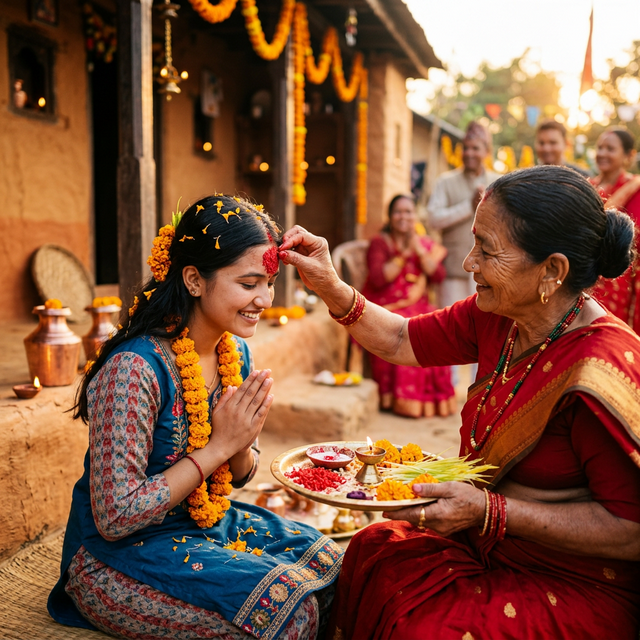
Dasain, the greatest Hindu festival, reverberates through the hills and valleys of the Indian Gorkha community with an exuberance that is both ancient and ever-renewing. As the autumn sun casts its golden light over the lush landscapes of Darjeeling and Kalimpong, the air is filled with a palpable sense of joy and anticipation. This is the time when families reunite, blessings are sought, and the victory of good over evil is celebrated with fervor.
The Historical Context
Dasain, or 'Durga Puja', as it is also known in other parts of India, commemorates the victory of Goddess Durga over the demon Mahishasura. The mythological significance of this event is profound. It symbolizes the eternal struggle between righteousness and malevolence. For the Gorkhas, this festival holds a special place, intricately woven into the cultural tapestry of their identity.
Historically, the Gorkhas, known for their valor and martial prowess, have always revered the Goddess Durga as a symbol of power and protection. The Gorkha regiments, with their storied past, often invoke her blessings before heading into battle, a tradition that underscores their deep spiritual connection with the festival.
Cultural Significance
Dasain is not merely a festival; it is a homecoming. It is a time when the hills echo with the laughter of children as they fly kites, and the aroma of 'sel roti' and 'alu dum' wafts through the air, inviting neighbors to partake in the communal feasts. The festival's rituals, from the planting of barley seeds to the receiving of 'tika' and 'jamara', are symbolic acts that reinforce familial bonds and community ties.
"Dasain is when we remember who we are and where we come from," says Asha Tamang, a schoolteacher from Kalimpong. "It's a time to honor our ancestors and pass down the stories that define us."
Traditions and Rituals
The festival spans fifteen days, each with its own significance. The first day, 'Ghatasthapana', marks the beginning, where a sacred jar is installed and barley seeds are sown. As the days progress, various rituals are performed, culminating on the tenth day, 'Vijaya Dashami'. On this day, elders apply 'tika' and 'jamara' on the foreheads of the younger members, bestowing blessings and prosperity.
In the tea gardens of Darjeeling, the festival is a melange of colors and emotions. Workers take a break from the arduous task of plucking leaves to engage in community dances and songs, celebrating their hard-earned respite.
The Human Element
For someone like Pemba Sherpa, a young man working in the bustling markets of Siliguri, Dasain is a rare opportunity to return to his ancestral village in the hills. "It's the only time of the year I get to see my entire family together," he shares. "We gather around, share stories, and feel a sense of belonging that is hard to find elsewhere."
This sense of belonging, of being part of something larger than oneself, is what makes Dasain the greatest festival for the Gorkhas. It is a celebration not just of mythology, but of life, resilience, and unity.
दशैं, सबैभन्दा ठूलो हिन्दू चाड, भारतीय गोर्खा समुदायका पहाड र उपत्यकाहरूमा प्राचीन र सदैव नवीकरण हुने उत्साहका साथ गुञ्जन्छ। जब शरद ऋतुको सूर्यले दार्जिलिङ र कालिम्पोङको हरियाली भू-दृश्यमा आफ्नो सुनौलो प्रकाश छर्छ, हावामा आनन्द र आशाको प्रत्यक्ष अनुभूति हुन्छ। यो परिवारहरू पुनर्मिलन हुने, आशीर्वाद खोजिने, र भलाइको खराबीमाथि विजय मनाइने समय हो।
ऐतिहासिक सन्दर्भ
दशैं, वा अन्य भारतका भागहरूमा 'दुर्गा पूजा' भनेर चिनिने, देवी दुर्गाले राक्षस महिषासुरलाई पराजित गरेको विजयको सम्झनामा मनाइन्छ। यस घटनाको पौराणिक महत्त्व गहिरो छ। यसले धर्म र अर्धर्मको अनन्त सङ्घर्षलाई प्रतीकात्मक रूपमा प्रस्तुत गर्दछ। गोर्खाहरूको लागि, यो चाड विशेष स्थानमा छ, उनीहरूको पहिचानको सांस्कृतिक बुनाईमा गहिरो रूपमा गाँसिएको छ।
ऐतिहासिक रूपमा, वीरता र युद्धकला कौशलको लागि परिचित गोर्खाहरू सधैं देवी दुर्गालाई शक्ति र संरक्षणको प्रतीकको रूपमा सम्मान गर्छन्। गोर्खा रेजिमेन्टहरू, जसको गरिमामय इतिहास छ, प्रायः युद्धमा जानु अघि उनको आशीर्वाद माग्छन्, यो परम्परा चाडसँगको गहिरो आध्यात्मिक सम्बन्धलाई उजागर गर्दछ।
सांस्कृतिक महत्त्व
दशैं केवल चाड मात्र होइन; यो घर फिर्ती हो। यो समय हो जब पहाडहरू बच्चाहरूको हाँसोले गुञ्जन्छ, र 'सेल रोटी' र 'आलु दम' को सुवासले छिमेकीहरूलाई सामुदायिक भोजमा सहभागी हुन आमन्त्रित गर्छ। चाडका अनुष्ठानहरू, जस्तै जौको बीउ रोप्नु देखि 'टीका' र 'जमरा' ग्रहण गर्नु सम्म, पारिवारिक बन्धन र सामुदायिक सम्बन्धलाई सुदृढ गर्ने प्रतीकात्मक कार्यहरू हुन्।
"दशैं हामीलाई को हौं र कहाँबाट आएका हौं भन्ने सम्झना गराउने समय हो," कालिम्पोङकी स्कुल शिक्षिका आशा तामाङ भन्छिन्। "यो हाम्रा पूर्वजहरूको सम्मान गर्ने र हामीलाई परिभाषित गर्ने कथाहरूलाई सँगै बाँड्ने समय हो।"
परम्परा र अनुष्ठान
यो चाड पन्ध्र दिनसम्म चल्छ, प्रत्येकको आफ्नै महत्त्व हुन्छ। पहिलो दिन, 'घटस्थापना', सुरुवातको संकेत दिन्छ, जहाँ पवित्र घडा स्थापना गरिन्छ र जौको बीउ रोपिन्छ। दिनहरू बित्दै जाँदा, विभिन्न अनुष्ठानहरू गरिन्छ, दसौं दिन, 'विजया दशमी' मा पुगेर समाप्त हुन्छ। यो दिनमा, ठूला मानिसले साना सदस्यहरूका निधारमा 'टीका' र 'जमरा' लगाउँछन्, आशीर्वाद र समृद्धि प्रदान गर्छन्।
दार्जिलिङका चिया बगानहरूमा, चाड रंग र भावनाको मिश्रण हो। कामदारहरू पात टिप्ने कठिन कामबाट विश्राम लिन्छन् र सामुदायिक नृत्य र गीतमा संलग्न हुन्छन्, उनीहरूको मेहनतको आरामलाई मनाउँछन्।
मानवीय पक्ष
पेमा शेर्पा जस्तै, सिलिगुरीको व्यस्त बजारमा काम गर्ने एक जवान मानिसको लागि, दशैं आफ्नो पुर्खाको गाउँमा फर्कने दुर्लभ अवसर हो। "यो वर्षको एकमात्र समय हो जब म मेरो सम्पूर्ण परिवारलाई एकसाथ देख्न सक्छु," उनी भन्छन्। "हामी भेला हुन्छौं, कथाहरू बाँड्छौं, र यस्तो भावना महसुस गर्छौं जुन अन्यत्र पाउन गाह्रो छ।"
यो सम्बन्धको भावना, आफैं भन्दा ठूलो केहीको भाग भएको महसुस, गोर्खाहरूको लागि दशैंलाई सबैभन्दा ठूलो चाड बनाउँछ। यो केवल पौराणिक कथाको मात्र होइन, जीवन, सहनशीलता, र एकताको उत्सव हो।