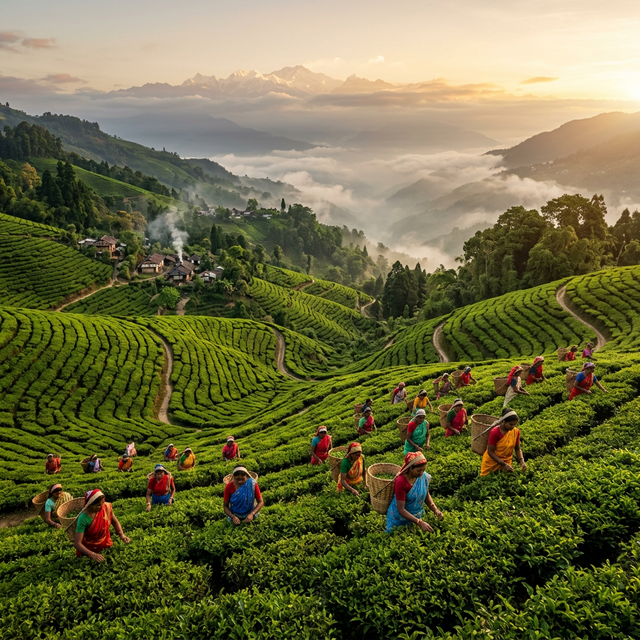
Perched in the misty hills of the Eastern Himalayas, Darjeeling is much more than a picturesque town; it is a living repository of cultural and historical significance. Known for its tea, often called the 'Champagne of Teas', Darjeeling holds stories of the first tea planters who laid the foundation of its tea industry.
The Dawn of Tea Plantations
In the mid-19th century, the British colonial administrators were in search of a place suitable for tea cultivation. The cool climate and fertile slopes of Darjeeling presented a perfect opportunity. Among the pioneers was Arthur Campbell, a civil surgeon, who is credited with introducing the Chinese tea plant, Camellia sinensis, to these hills.
Campbell’s experimental plantation in 1841 marked the beginning of what would become a world-renowned industry. By 1852, several gardens had been established, with the Makaibari Tea Estate being one of the oldest, founded in 1859 by G. C. Banerjee. These early plantations were not just economic ventures but cultural crossroads where local communities and colonial interests intertwined.
The Gorkha Connection
Integral to the success of these tea gardens were the local Gorkha communities. Known for their resilience and industriousness, many Gorkhas were employed as laborers, overseers, and even as managers in these burgeoning estates. The Gorkhas brought with them their own traditions, languages, and a work ethic that would become synonymous with Darjeeling tea.
"The Gorkhas have always been the backbone of Darjeeling's tea industry. Their hard work and dedication are woven into every leaf," says local historian Anjali Pradhan.
The symbiotic relationship between the Gorkhas and the tea industry helped shape the cultural landscape of Darjeeling. Traditional festivals, such as Dashain and Tihar, were celebrated with great enthusiasm, blending Hindu and Buddhist traditions harmoniously.
A Legacy of Flavor and Culture
The legacy of Darjeeling’s first tea planters lives on in the unique flavor profile of its tea. Each garden, with its specific altitude and microclimate, produces a distinct taste, ranging from floral and fruity to musky spiciness. This diversity is a testament to the skill and dedication of the families who have cultivated these lands for generations.
Today, tea gardens like Glenburn, Happy Valley, and Singtom continue to thrive, attracting tea connoisseurs and tourists alike. These gardens are not just places of work but homes for families, preserving the traditions and stories of those who first tilled the soil.
The Human Element
Behind every cup of Darjeeling tea lies the story of human endeavor. Workers start their day at dawn, plucking the first flush with nimble fingers. Their laughter and songs echo through the valleys, a reminder of the community spirit that defines this region. The faces of the older generation tell tales of endurance and hope, while the younger ones look to the future with ambitions of innovation.
"Our tea is not just a product; it is our heritage," remarks third-generation tea planter Ramesh Gurung. "Every leaf tells a story of our people and our land."
As we sip on a cup of Darjeeling tea, we are reminded of the rich tapestry of history and culture that infuses each brew. It is a legacy that continues to inspire and connect people across the globe.
पूर्वी हिमालयको कुहिरोले ढाकिएको डाँडामा अवस्थित दार्जिलिङ्ग, एउटा रमणीय सहर मात्र होइन; यो सांस्कृतिक र ऐतिहासिक महत्वको जिवन्त भण्डार हो। यसको चियाको लागि प्रख्यात, जुन प्रायः 'चियाको च्याम्पेन' भनिन्छ, दार्जिलिङ्गमा पहिलो चिया बगान मालिकहरूको कथा छन् जसले यसको चिया उद्योगको जग बसाएका थिए।
चिया बगानहरूको उदय
१९ औं शताब्दीको मध्यतिर, ब्रिटिस उपनिवेश प्रशासनहरू चिया खेतीको लागि उपयुक्त स्थानको खोजीमा थिए। दार्जिलिङ्गको चिसो मौसम र उपजाऊ ढलानले एक उत्तम अवसर प्रस्तुत गर्यो। अग्रणीहरूमा आर्थर क्याम्पबेल, एक नागरिक सर्जन थिए, जसले चिनियाँ चिया बिरुवा, Camellia sinensis, यी डाँडामा परिचय गराए।
१८४१ मा क्याम्पबेलको प्रयोगात्मक बगानले एक विश्व प्रसिद्ध उद्योगको सुरुवात गर्यो। १८५२ सम्म, धेरै बगानहरू स्थापना गरिएका थिए, जसमा मकैबारी चिया बगान १८५९ मा जी.सी. बनर्जी द्वारा स्थापित भएका थिए। यी प्रारम्भिक बगानहरू केवल आर्थिक प्रयास मात्र नभई सांस्कृतिक मिलन बिन्दु पनि थिए जहाँ स्थानीय समुदाय र उपनिवेशीय चासोहरू मिल्थे।
गोर्खा जडान
यी चिया बगानहरूको सफलतामा स्थानीय गोर्खा समुदायहरू एकदमै महत्वपूर्ण थिए। आफ्नो सहनशक्ति र परिश्रमको लागि परिचित, धेरै गोर्खाहरू यी उदीयमान सम्पदामा कामदार, निरीक्षक र यहाँसम्म कि व्यवस्थापकको रूपमा पनि नियुक्त भए। गोर्खाहरूले आफ्नै परम्परा, भाषा र कार्य नैतिकता ल्याए जुन दार्जिलिङ चियासँग सम्बन्धित भयो।
"गोर्खाहरू सधैं दार्जिलिङ्को चिया उद्योगको मेरुदण्ड रहेका छन्। तिनीहरूको मेहनत र समर्पण हरेक पातमा बुनेको छ," स्थानीय इतिहासकार अञ्जली प्रधान भन्छिन्।
गोर्खाहरू र चिया उद्योगको बीचको परस्पर सम्बन्धले दार्जिलिङको सांस्कृतिक परिदृश्यलाई आकार दियो। दसैं र तिहार जस्ता परम्परागत चाडपर्वहरू ठूलो उत्साहका साथ मनाइन्थ्यो, जसमा हिन्दू र बौद्ध परम्पराहरू सँगै मिल्थे।
स्वाद र संस्कृतिको विरासत
दार्जिलिङका पहिलो चिया बगान मालिकहरूको विरासत उनको चियाको अनौठो स्वाद प्रोफाइलमा जीवित छ। प्रत्येक बगान, यसको विशिष्ट उचाइ र सूक्ष्म जलवायुका साथ, फूल र फलदेखि मस्की मसालादार सम्मको विशिष्ट स्वाद उत्पादन गर्दछ। यो विविधता ती परिवारहरूको कौशल र समर्पणको प्रमाण हो जसले पुस्तौं देखि यी भूमि खेती गरेका छन्।
आज, ग्लेनबर्न, ह्यापी भ्याली, र सिङटोम जस्ता चिया बगानहरू अझै पनि फस्टाउँदैछन्, चिया पारखीहरू र पर्यटकहरूलाई आकर्षित गर्दै। यी बगानहरू केवल काम गर्ने ठाउँ मात्र होइनन् तर परिवारहरूको घर पनि हुन्, जसले माटो खनेका तिनको परम्परा र कथाहरू जोगाइराखेका छन्।
मानव तत्व
हामी पिउने प्रत्येक दार्जिलिङ चियाको कप पछाडि मानव प्रयासको कथा छ। कामदारहरूले बिहानै आफ्नो दिन सुरु गर्छन्, पहिलो फ्लसलाई चतुराइपूर्वक टिप्दै। तिनीहरूको हाँसो र गीतहरूले उपत्यकाहरूमा प्रतिध्वनित हुन्छन्, यस क्षेत्रलाई परिभाषित गर्ने सामुदायिक भावना सम्झाउदै। पुरानो पुस्ताको अनुहारहरूले सहनशीलता र आशाको कथा सुनाउँछ, जबकि कान्छाहरू नवप्रवर्तनको महत्वाकांक्षासँग भविष्यतर्फ हेर्छन्।
"हाम्रो चिया मात्र उत्पादन होइन; यो हाम्रो सम्पदा हो," तेस्रो पुस्ताका चिया बगान मालिक रमेश गुरुङ भन्छन्। "हरेक पातले हाम्रो जनताको र हाम्रो भूमिको कथा बताउँछ।"
जब हामी दार्जिलिङ चियाको कपमा घुट्कोलिन्छौं, हामीलाई प्रत्येक ब्रूमा समाहित भएको इतिहास र संस्कृतिको धनी तानाबाना याद हुन्छ। यो विरासत हो जुन निरन्तर प्रेरित गर्दछ र विश्वभरका मानिसहरूलाई जोड्दछ।